Introducing Scite's ChatGPT Plugin
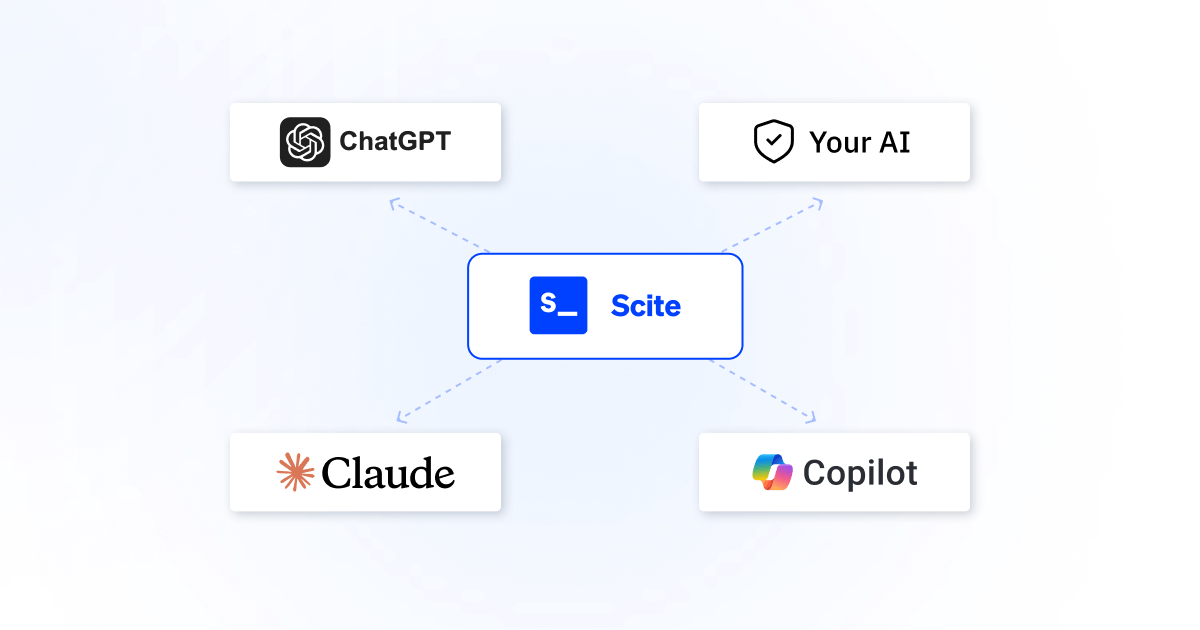
Scite is now available as a verified plugin in the ChatGPT plugin directory. Add it in one click to ground ChatGPT's answers in real peer-reviewed literature with citations you can verify.
Insights on scientific research, citations, and scholarly publishing.

Scite is now available as a verified plugin in the ChatGPT plugin directory. Add it in one click to ground ChatGPT's answers in real peer-reviewed literature with citations you can verify.

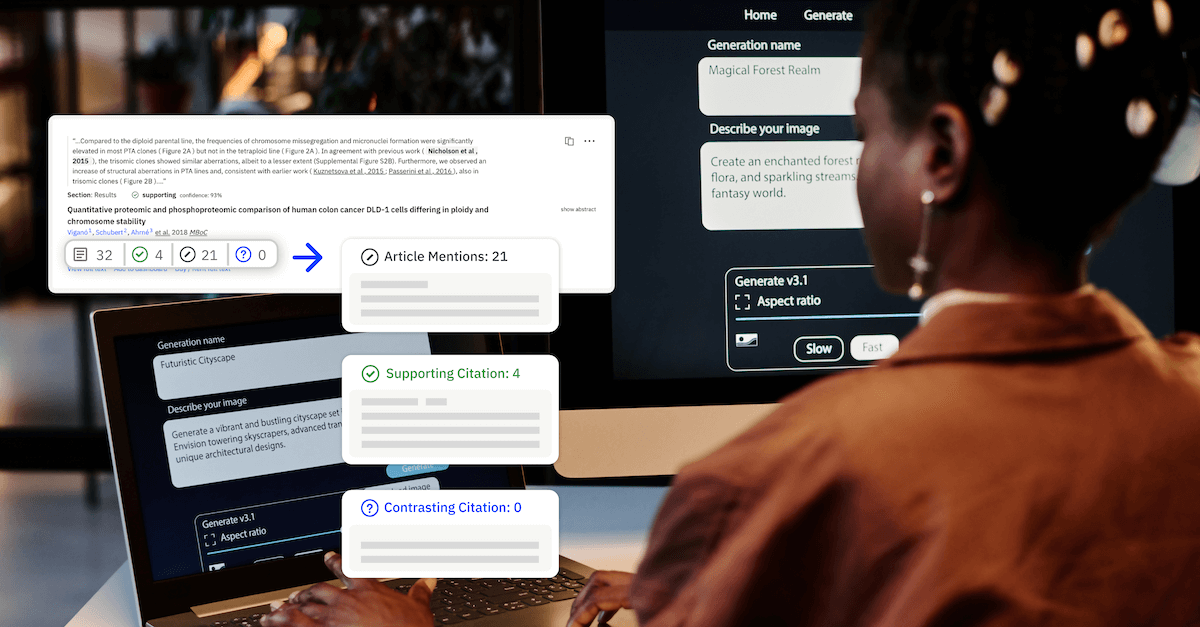
Starting today, you can connect Scite to the AI tools you already use. Search 250M+ articles, evaluate research with Smart Citations, and access full-text PDFs - all without leaving your workflow.

We recently asked researchers, information professionals, and academics a simple question: Do you trust LLM answers without citations? 88% said no. When we asked what matters most when using generative AI, accuracy and trustworthiness topped the list, followed closely by citation quality and source verification.
January focused on expanding what researchers can explore, improving how work gets organized, and strengthening the foundation for faster innovation throughout 2026.
December brought a set of meaningful improvements to Scite Assistant focused on clarity, usability, and deeper exploration.

The "no AI" policy ship has sailed. Faculty members across disciplines have spent the past two years watching students submit papers with suspiciously smooth prose and nonexistent citations, leading to a game of academic whack-a-mole that benefits no one.
November was all about refining the core experience—making Scite feel clearer, faster, and more predictable for both new and experienced users.

Zotero is already one of the best tools for collecting, organizing, and citing research. But the real power comes from its plugin ecosystem.
October was all about speed, clarity, and action—making it faster to get answers, easier to trust citations, and simpler to turn insights into outcomes.

Finding relevant literature has always been the bottleneck. AI is changing that, but the tools vary widely in how they approach the problem.

Researchers spend hours in their browser every day, but the default browsing experience gives you almost nothing to work with. The right extensions change that.
We are now pleased to present our first annual rankings report for fields, institutions, and journals

Literature reviews take weeks. AI won't write one for you, but it can compress the most tedious parts of the process and help you see things you'd otherwise miss.

A practical look at where AI tools help in the research workflow, where they fall short, and how to evaluate them.

The citations you need exist. The problem is finding them efficiently and knowing whether they actually support what you think they support.
It's been over a year since we first launched scite Assistant, and we've been hard at work making improvements based on the valuable feedback from our users. We recently unveiled a brand new look for scite Assistant along with several enhancements to improve your experience.
As a psychology professor, I regularly teach research methods courses. Over a two-course sequence, I teach my students various approaches to empirical psychological research. This culminates in a semester-long project in which students formulate a hypothesis, design a study, collect and analyze data, and communicate the results.
Bibliometrics is a field of study that involves the quantitative analysis of scholarly publications and their citations to evaluate various aspects of research, such as impact, productivity, and collaboration. The history of bibliometrics can be traced back to the pioneering work of Eugene Garfield, who introduced the first citation index for sciences in 1953 (Masic, 2016).
We’re excited to enter a new phase of our journey at scite by coming together with [Research Solutions](https://www.researchsolutions.com/). The motivation behind this decision was our desire to further our mission of introducing the next generation of citations and better serve our users, publishers, and the scholarly ecosystem for the long term.
Literature reviews and critical analyses take time. In order to write high quality research you need to engage with the literature, read the references being cited, read the citations to the paper and make sure you understand the field as a whole. Collecting and reading all relevant references and citations takes a long time. scite helps you **spending less time on research and writing** while simultaneously **boosting the quality of your work** by presenting what is said about a paper right away.