The Question Every Evidence Team Gets & How To Answer It Fast
The request usually comes from a director, and it usually comes with a deadline. Semaglutide and cardiovascular outcomes. A competitor's program. An adverse event signal that needs context before Thursday. The deliverable is never a folder of PDFs. It's a position the team can stand behind: where the science sits, where it's contested, and which sources back each point.
Evidence teams, medical affairs groups, and competitive intelligence functions field these types of requests all the time. Underneath almost every request is the same question: what's the full picture, and where is it debated?
That second piece is where things can get tricky. Anyone can assemble sources that agree. A defensible evidence picture has to account for the findings that don't.
An Argument, Not An Extraction
There's a temptation, especially under deadline, to treat evidence work as an extraction task. Pull the endpoints into a table, list the trials, cite the counts, ship it. Tables help, but they aren't the same as making an argument.
A director reviewing your document won't ask how many papers you found. They'll want to know why you trust the ones you chose, if anything contradicts them, and what that means for your position. Extraction answers the first question, but only an evidence-based argument covers the rest.
That distinction shapes everything about how the work should be done. The aim is a clear account of where the field agrees, where it disagrees, and why your read of the balance holds up.
The Evidence Never Lives In One Place
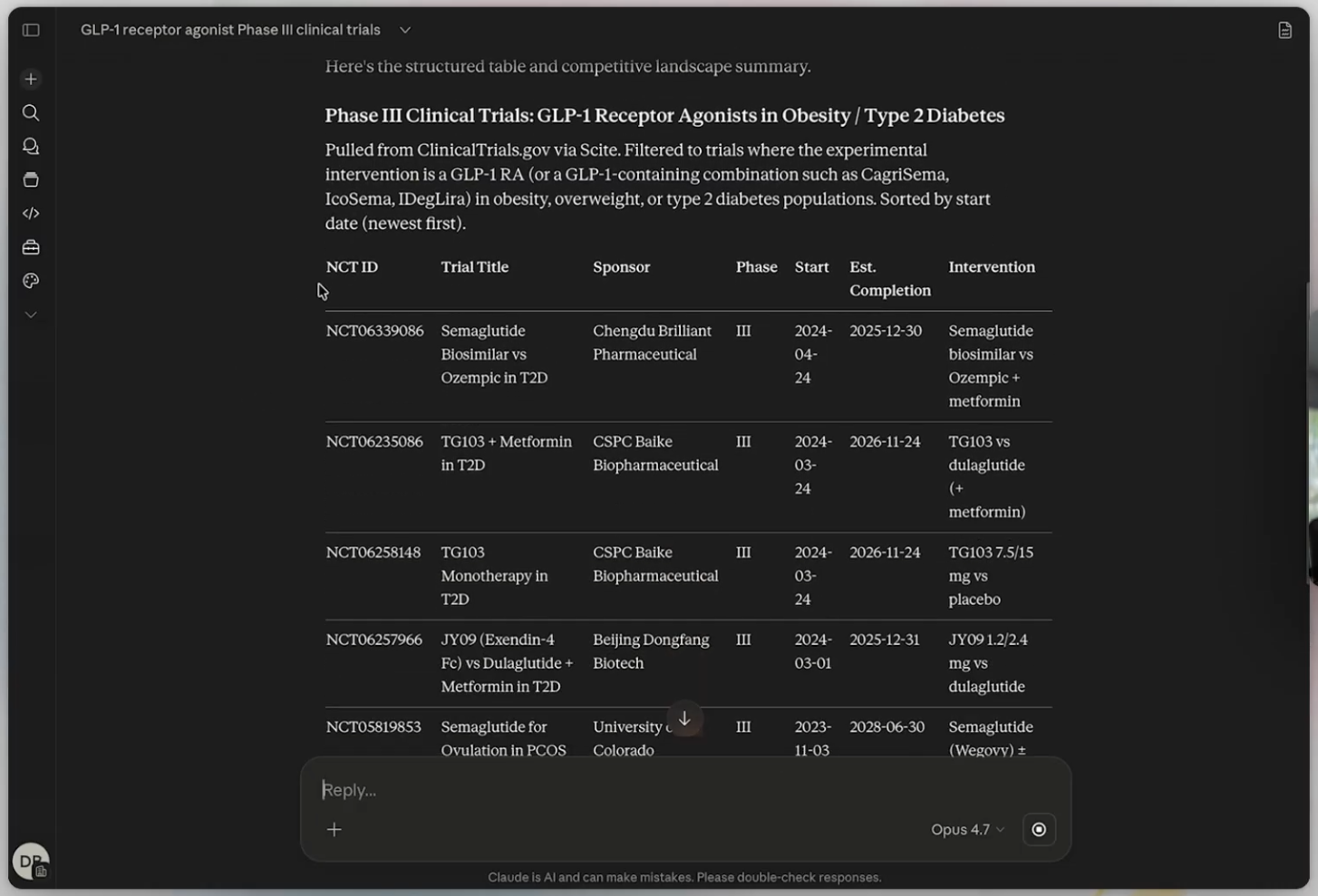
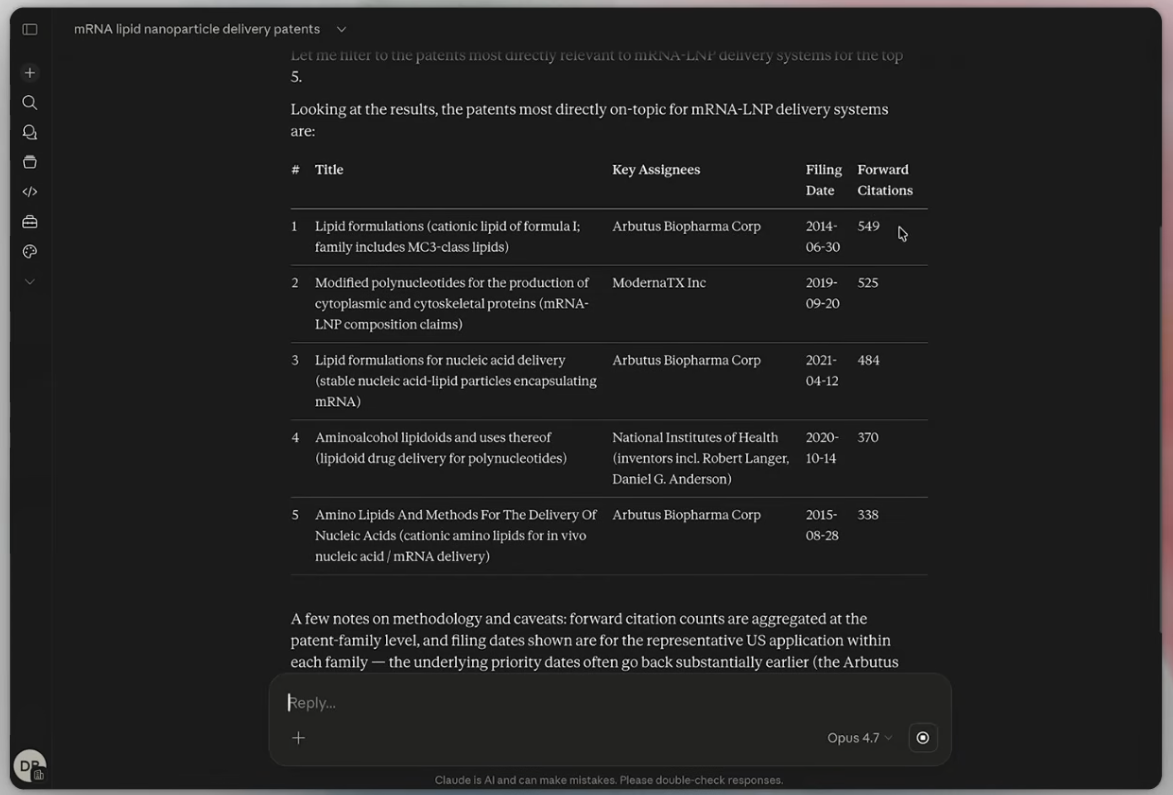
The work gets slow when you have to piece together evidence from source types that were never designed to talk to each other. For any serious question in pharma, biotech, or medtech, the relevant evidence is scattered across them. Clinical trial registries have study designs and outcomes. FDA safety data shows post-market signals. Patents reveal where competitors are placing bets. Grants show where funding, and therefore future research, is heading. And published research holds the findings themselves, along with the citation record that illustrates how those findings have held up.
Each of these sources has its own system, search conventions, and export format. The traditional workflow means querying each one separately, reconciling the results by hand, and hoping nothing important slips through the cracks. That's days of work. But the director wants it by Thursday.
Even worse, doing this all manually often leads to documents that fall apart under scrutiny. If a reviewer asks about an FDA signal you didn't check because you ran out of time, your whole position becomes shaky. Not because your literature review was sloppy; because the picture wasn't complete.
One Question Across Every Dataset
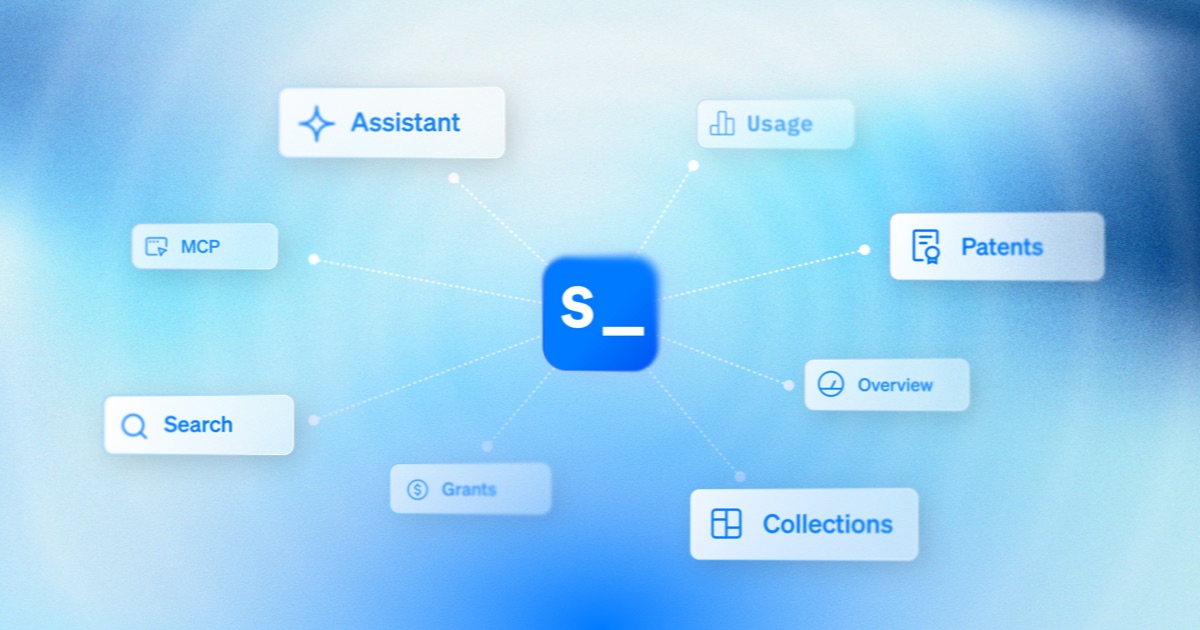
That workflow is changing. Evidence teams now use AI tools like Claude, ChatGPT, and Microsoft Copilot. The Scite MCP (Model Context Protocol) server connects these tools directly to Scite's evidence datasets, so a single question can draw on six to eight sources at once (the key trials, published literature and its citations, FDA adverse event signals, patents, and grants) returned together as one synthesized response with sources attached.
In practice, the prompt looks like the request itself. Something like:
Build me an evidence picture for semaglutide and cardiovascular outcomes. The key trials, the published literature and how it has been cited, and any FDA adverse event signal. Note where the evidence is contested.
That last instruction is key, and it's the one a general-purpose AI tool can't fulfill on its own. Knowing where evidence is contested requires citation context: not a count of how often a paper has been cited, but what each citing paper says. Scite's Smart Citations classify citation statements as supporting, mentioning, or contrasting, drawn from a database of 319 million articles and 1.6 billion citation statements. When the response shows that a key trial has contrasting citations, the evidence comes from the published record, not the model's opinion.
Procurement and research IT teams will want to know how the Scite MCP works. It acts as a read-only retrieval layer. The AI tool your team uses handles generation, while Scite receives only specific tool call parameters (such as a search query or DOI lookup) and returns structured data: bibliographic metadata, citation counts, Smart Citation classifications, and a DOI with a resolved link. Each result routes researchers to the version of record through an institutional subscription or a per-article purchase. Beyond openly licensed material, no full text reaches the AI; subscription and paywalled content remains protected by its license. That keeps licensed full text out of the AI while still giving researchers access to the evidence they need.
Find The Contradicting Evidence Before The Meeting Does
Every evidence document will be challenged at some point. Someone might have read a paper you didn't cite, remember a retraction you missed, or want to see the position stress tested. The documents that hold up are the ones that already address challenges.
You can build that in deliberately. In the same session, your team can ask for the strongest evidence against your position and flag any cited paper with a retraction, correction, or editorial concern. If a study central to your argument has been corrected since it was published, you want to be the one to point it out in your document, with the notice cited.
In this way, you flip the typical anxiety around evidence work. Instead of hoping nobody finds the weak point, you find it first and address it in writing. A position that acknowledges its strongest counterevidence is much harder to dismiss than one that ignores it.
A Record Your Colleagues Can Check
The chat session isn't the deliverable. The document is: the one that leaves your hands and circulates, to the director, to regulatory, to the broader team. Every claim in it needs a source a colleague can open and verify.
Collections make that durable. As you build the evidence picture, save the supporting papers to a named Collection, something like Semaglutide CV Evidence, so it lasts past that specific session. Six weeks later, when the question resurfaces with a new wrinkle, your vetted reference set is still there. New findings get evaluated against it rather than starting from zero. And if a colleague questions a source, the answer is a link, not a memory.
Because that's the real test of this work. When the document gets challenged in a meeting and has to hold. Sources attached, contradictions accounted for, corrections flagged. Defensible, in the plain meaning of the word.
The Deadline Is The Point
None of this replaces human judgment. Deciding how to weigh a contested finding or what a safety signal means for your program is still up to the people in the room. The workload doesn't shrink. The shift is how the time is spent: less time reconciling exports from five systems, more time on the analysis the director was asking for in the first place. Same deadline, better questions.
If your team is fielding whole-picture requests with too many databases and not enough time, the Scite MCP connects your AI tools to the evidence record. You get literature with citation context, trials, safety data, and more, with sources attached to every answer.