A Citation Count Is Not A Verdict
Every citation is a small act of trust. When your name goes on a paper, you're vouching for what sits underneath it, including the strength of the findings, the status of the cited research, and the sources you could defend if a reviewer pressed. Faculty, postdoc, or PhD student, the stakes are the same for anyone who publishes.
Finding papers was never the hard part. Any search engine will return more literature on your topic than you could read in a semester. The hard part comes after the search, when you need to figure out which findings are reliable, which claims hold consensus, and where debates are ongoing. Researchers generally say the same thing: "before building on a result, I want to know where the field currently stands."
What The Count Leaves Out
A paper cited several hundred times looks settled. Yet the count alone says nothing about what those citing papers found. Some replicated and confirmed the results. Some tried and couldn't. Plenty mention it in passing on the way to a different argument. Treating all of those as equal can give weak findings too much authority and make strong ones seem more contested than they really are.
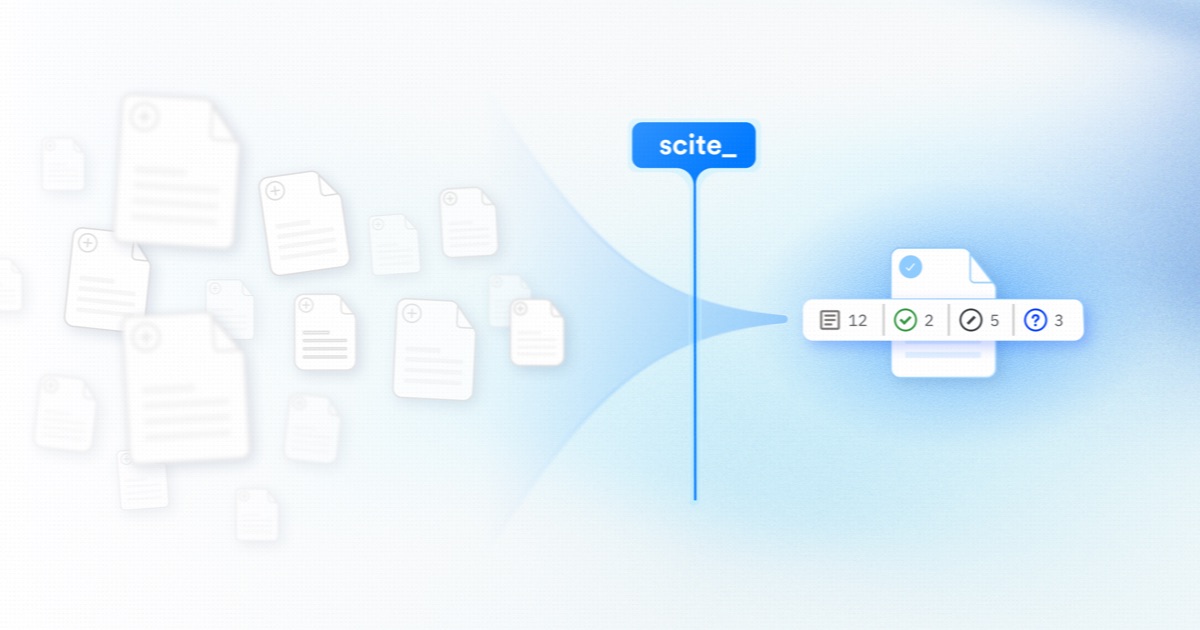
Scite's Smart Citations restore the missing context. Each citation statement is classified by whether it supports, contrasts, or only mentions the work. Editorial notices travel with the record too, so if there's a retraction or correction, you see it right away. The question you can answer shifts from how often a paper has been cited to how it has held up, which was the real question all along.
Start With One Real Question
The workflow begins where the research begins, with the question itself. Ask Scite's Assistant something you'd pose to a colleague: what's the current evidence that psilocybin-assisted therapy produces durable improvement in treatment-resistant depression, and where do studies disagree. The response comes back grounded in the literature, with the points of agreement and the live disputes both visible.
From there, focus on the papers that will carry your argument. A report on a specific study lays out its full citation record, including the contrasting citations (something a reference list built on counts alone wouldn't surface). It's better to see disagreements early, even if it's uncomfortable, than to be surprised by them in a reviewer's comments.
The papers that survive this scrutiny get saved to a collection: a named, vetted reference set you can keep using. That set becomes the backbone of the literature review, the one you can cite with more confidence because you know what's in it and why. You can annotate it as you go, adding notes and supporting files, so the collection becomes a working record of your thinking, not just a list of papers, one you pick back up wherever you left off.
Audit The Set Before You Cite It
A vetted set still has a shelf life. A study that anchored your reference list in March can carry an erratum by June. Through the Scite MCP, you can check a collection from within your preferred AI tool, like Claude, ChatGPT, or Copilot. Working from your collection, have it resurface any disputes and flag any notice that's appeared since, a correction, retraction, or concern logged against a paper you were about to lean on.
The MCP returns structured results: bibliographic metadata, Smart Citation classifications, and a DOI for each paper that resolves to the version of record on the publisher's platform.
AI assistants can sometimes make up references if left unchecked. Grounded in the citation record, they let you spend your effort pushing the work forward instead of re-checking the ground under your feet. Ungrounded, they put a researcher's hardest-won asset at risk: a reputation that one fabricated citation, once it reaches print, can damage.
A Set That's Still Standing Next Month
The output of all this is a reference list you can stand behind. Every entry has been pressure tested. Contradictions are weighed rather than ignored. Corrections are caught. And because the collection endures, the work compounds. When the record changes, you re-run the audit instead of rebuilding the review from scratch.
Trust is at the heart of scholarship, and it's tested at every step, by co-authors, reviewers, and anyone who builds on your work. Start where they'll start, with the citation record. Ask one real question and see where the field stands.